A home on Bannock Street in Boise's East End gets its heat from a well drilled in 1890.1 The water arrives at about 170 degrees Fahrenheit, runs through the house, and leaves.10 No boiler, no furnace, no gas bill for heat. About 300 homes along Warm Springs Avenue and the streets beside it, Bannock among them, work this way.4,11 This is the oldest geothermal district heating system in the United States, and by most accounts the first.1,5
This page is an attempt to tell the whole story in one place: how the water got here, who drilled for it, how the neighborhood grew around it, what nearly killed it, and what people do with it today.
Part one: before the wells
Hot springs along the base of the foothills were the earliest sign of what lay underneath Boise.7 The Native Americans of the region used hot springs for bathing and gathering, and the springs east of town served as a stop for miners and pioneers coming off the Oregon Trail.4
By the 1880s Boise's water was a business. In 1881 brothers Hosea and Benjamin Eastman began supplying their Overland Hotel with water piped from springs near Hull's Gulch, and later completed artesian wells to sell water to the town.12 When Idaho became a state in 1890, Boise entered a period of abrupt growth, and Warm Springs Avenue was still an undeveloped country road leading to Kelly's Hot Springs, the resort the street was named for.3
Two companies fought for the town's water contract. The Idaho Statesman reported in March 1891 that "hatred and strife" were rampant in Boise because of the battle between them.1
The man who would not go away
Through this period a recent arrival named Grumbling kept visiting the offices of Hosea Eastman and William Ridenbaugh, trying to convince them to invest in hot water wells east of town. His evidence was folk observation: It did not freeze around the spot in the winter, seemed warm near the surface and cattle had stepped in the soft earth never to appear again.
1
Kevin Rafferty, the engineer who wrote the system's centennial history in 1992, put it this way: the development of the BWSWD might never have occurred had it not been for a single unemployed well driller pestering local businessmen to invest in hot water wells.
1
Part two: 1890 to 1892, the wells and the Nat
Drilling began at the warm-water swamp near the Territorial Penitentiary shortly before Christmas 1890.1,2 By Christmas the well had reached 112-degree water at 112 feet.4 A larger rig was brought in, and on January 24, 1891, at 404 feet, the drillers hit a "tremendous" flow of 175-degree water.4 A second well followed. By March 1891 the two wells could sustain an artesian flow of 550 gallons per minute at 170 degrees.1 On March 28, 1891, the rival water companies merged as the Artesian Hot and Cold Water Company.4,12
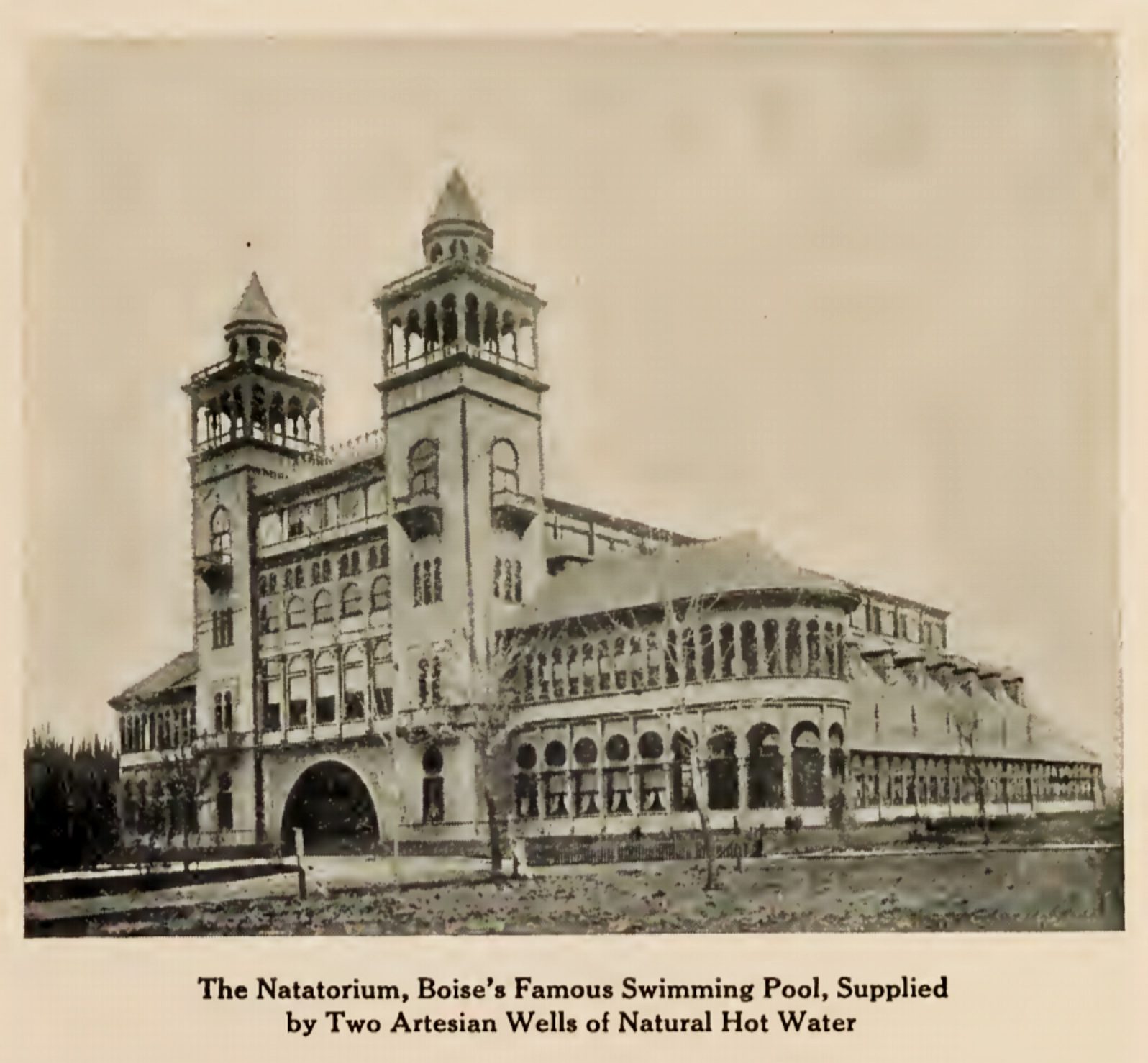
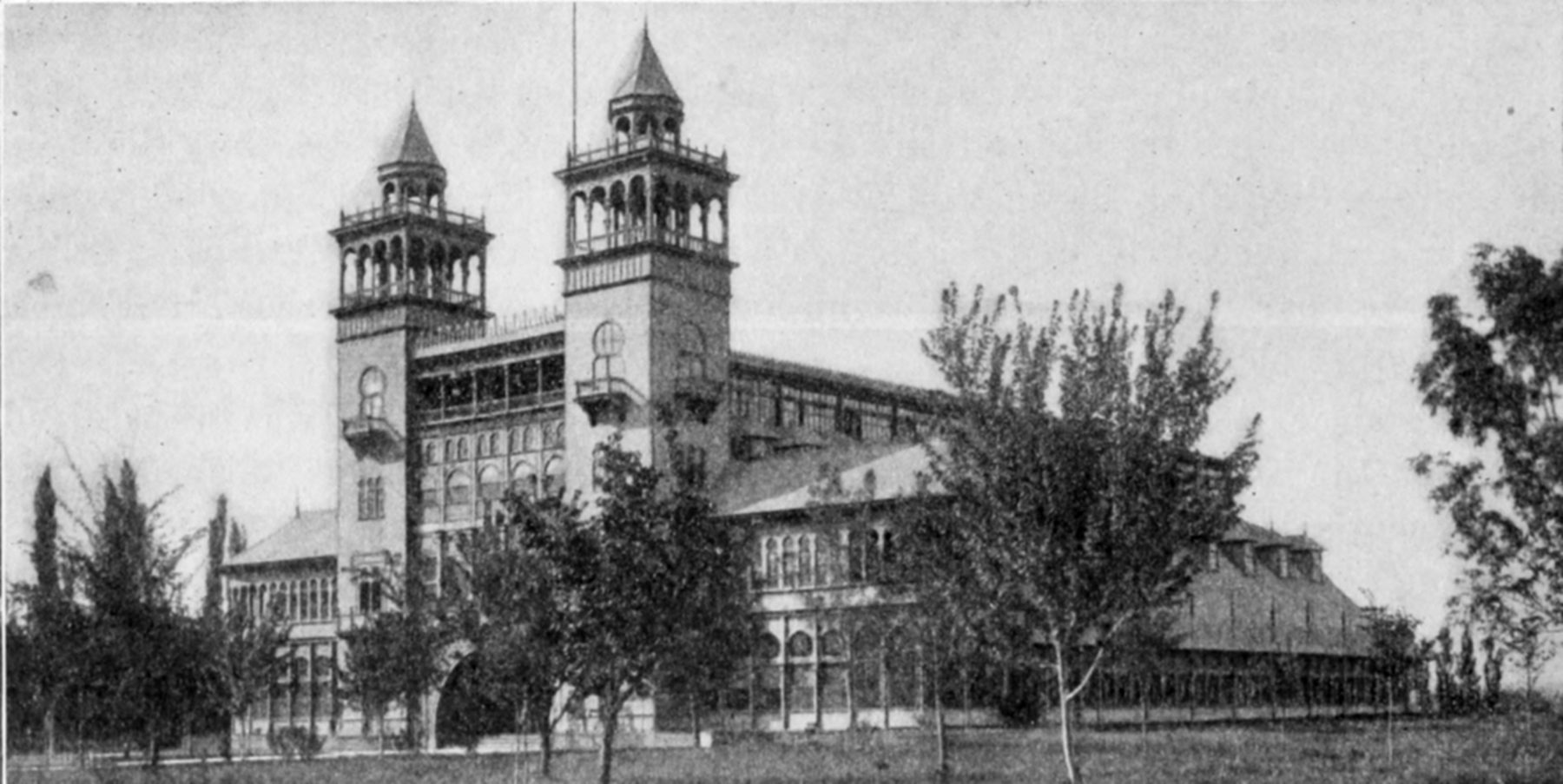
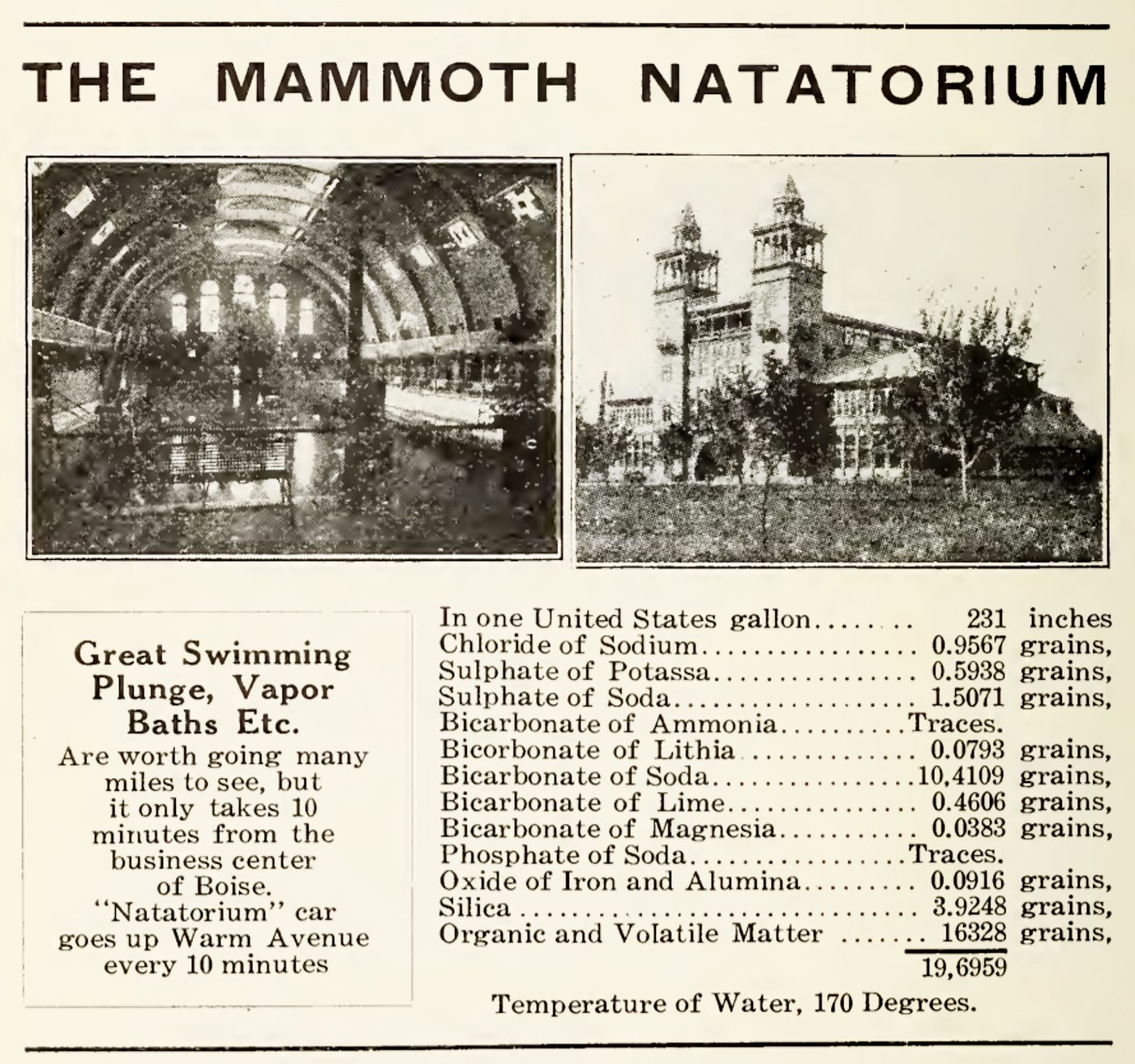
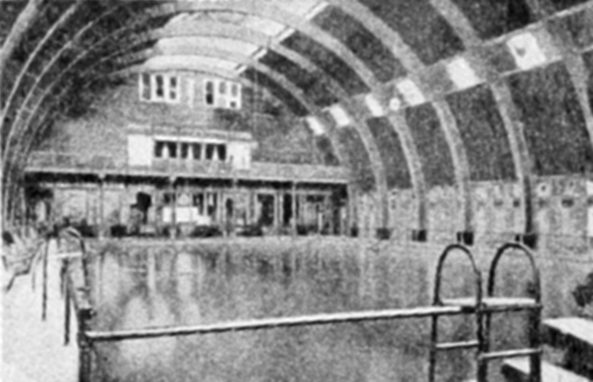
Now they had hot water and nothing to do with it while distribution lines were built. Having seen the new Natatorium in Helena, Montana, Eastman and his partners hired the same architect to design one for Boise.1 A wooden pipeline carried the water to the site on Warm Springs Avenue, and the Boise Natatorium opened on May 25, 1892.1,2
The Nat was 15,000 square feet, with a 65-by-125-foot pool, 50 bath and dressing rooms, a dancing and roller skating balcony, parlors, billiard rooms, card rooms, a cafe and a bar. The $100,000 investment included electric ranges for party hosts, an extravagance at the time.1 The pool was one of the largest indoor pools in the country.12
The first heated houses
Before the Nat opened, the hot water had already gone into a house. In February 1892 C. W. Moore tried natural hot water heat in his new home on Warm Springs Avenue. When it "performed beautifully," H. B. Eastman connected his own new house nearby.2 Both men were directors of the company, and connecting their homes was a deliberate demonstration: local building owners were wary of the new heating source and some were certain the flow or temperature would soon decline.1 Through February and March 1892 the two families hosted social functions in their warm houses.1 Moore's house at Warm Springs and Walnut is credited as the first residence in the United States heated entirely by geothermal water.12
The pitch was price. A home cost $2 a month for hot water, against coal at $7 a ton.1 Small houses of eight rooms or fewer paid $2 a month, larger ones $3.4,2
The Idaho Statesman of April 2, 1892 understood what was happening: It is probable that people do not fully realize the value of the hot water that flows in such abundance from the artesian wells. It is understood in a general way to be a nice idea to have houses heated by such an agency; but, very few whose attention has not been called to the subject appreciate what the influence of this method of heating will be upon the future.
1
Part three: the street the hot water built
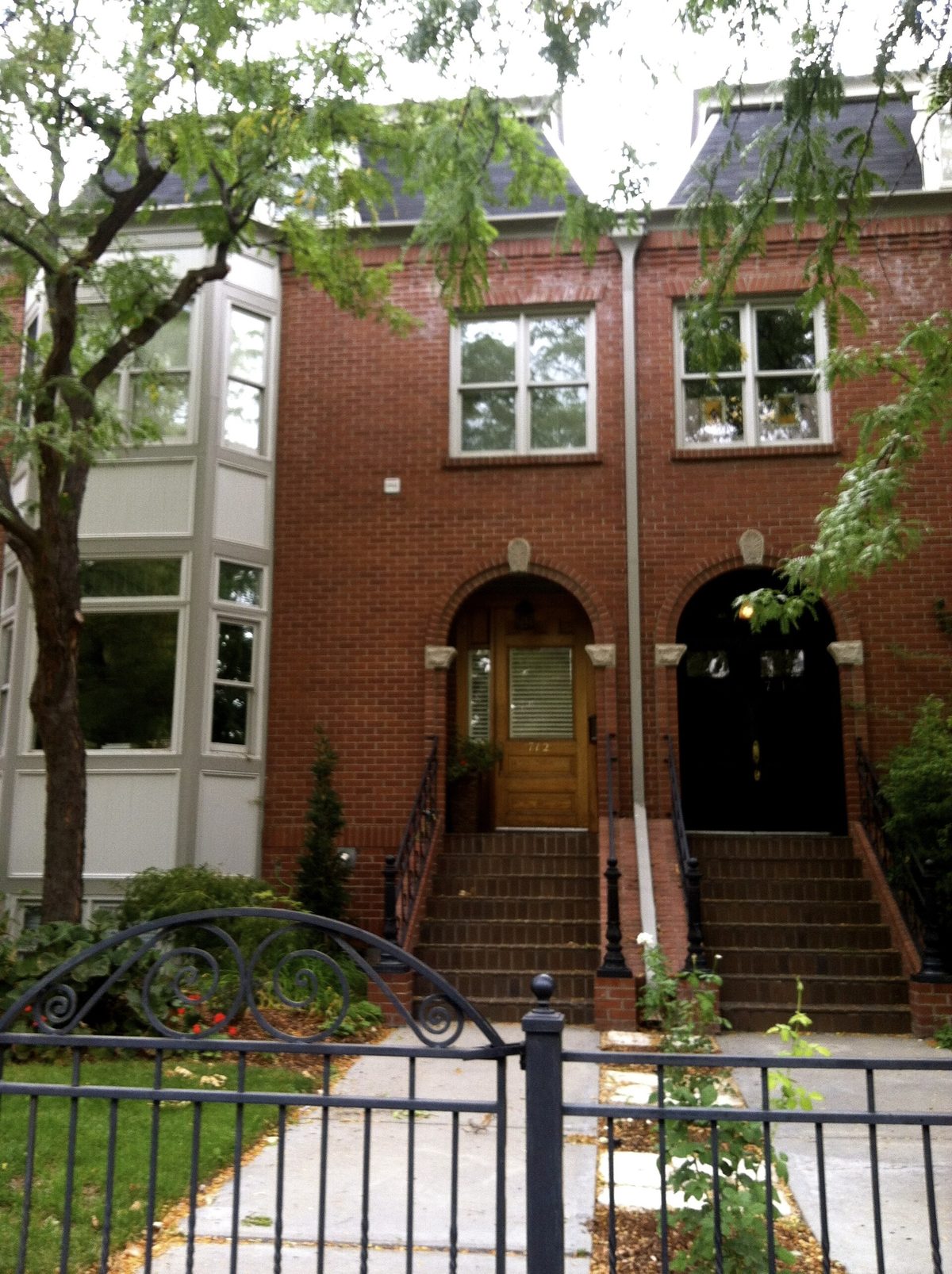
The wood-stave pipelines were extended along Warm Springs Avenue toward downtown so homes and businesses could connect. The "several miles" of pipe cost $20,000, against a calculated saving of $50,000 a year in wood and coal.1,2 Within a few years the system had 4.5 miles of large-diameter pipe serving 200 homes and 40 downtown businesses.1
Three things arrived almost at once: the Nat, the hot water lines, and a streetcar. On August 23, 1891, the first passengers boarded Boise's electric streetcar to ride up Main Street and Warm Springs Avenue; the Natatorium was built at the end of the line.13 Together they transformed Warm Springs Avenue into Boise's finest neighborhood.
1 It replaced Grove Street as the city's leading residential area.3 Officers of the hot water company built mansions along the Avenue, and substantial mining wealth from the Boise Basin followed.3 Houses advertised that they were heated with "Natatorium water."16
The neighborhood became so well known that the comedian Will Rogers referred to it as Hot Water Bottle Boulevard.
1
Bannock Street and the side streets
The hot water never stopped at the Avenue. The National Register district drawn in 1980 runs along Warm Springs Avenue from Bruce Street west to 1522 Warm Springs, and it reaches north to take in the corners of Walnut and Bannock, the corners of Locust and Bannock, and the house at 909-911 East Bannock.3 The nomination describes the streets north of the Avenue as "modest bungalows and some late Queen Anne style houses," with the boundary extended north wherever a house of comparable significance stood.3
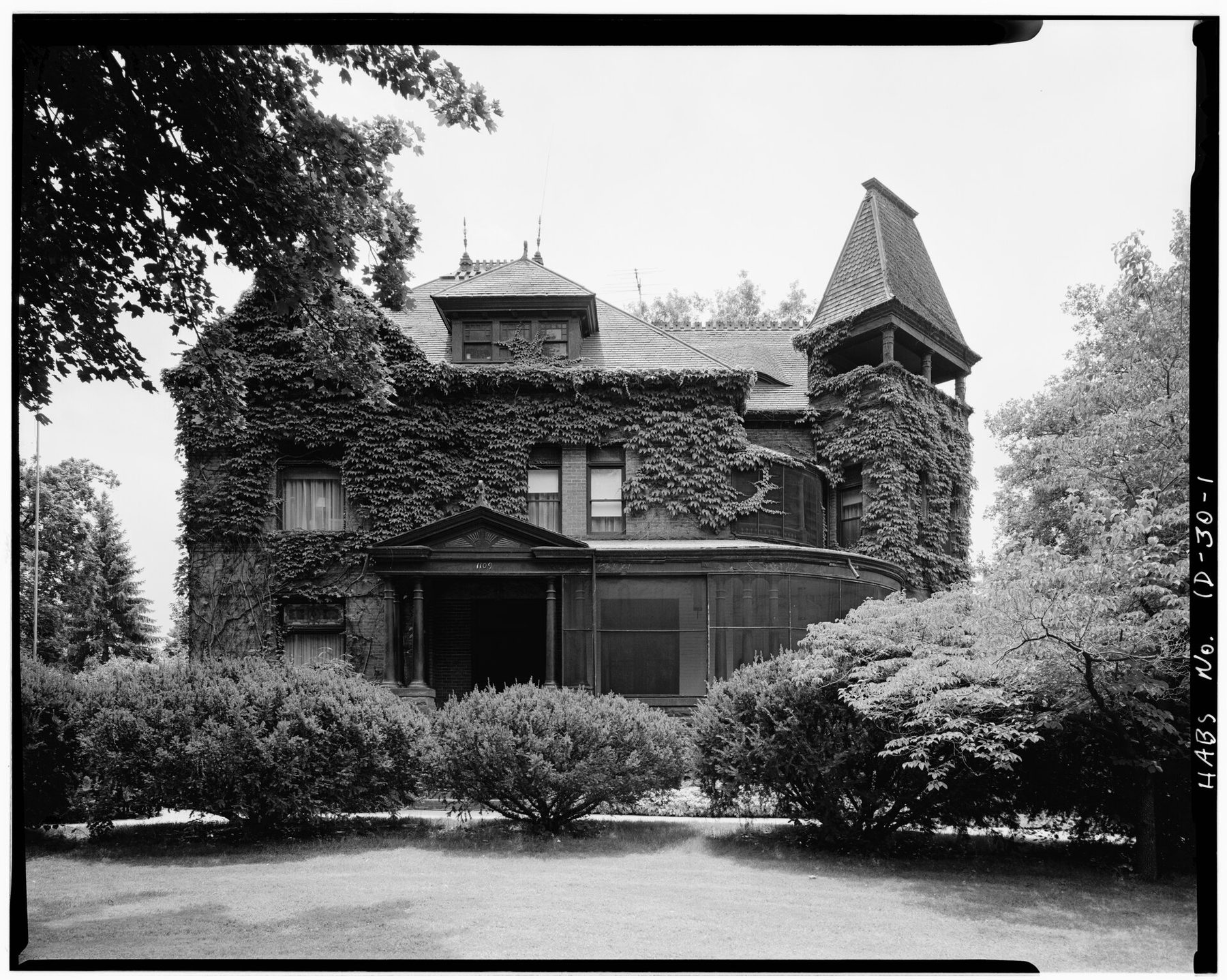
The one Bannock house singled out in the nomination was built in 1911 for Louis Feldman: a two-and-a-half-story brick and shingle house with a deep front porch, a hipped-roof dormer and wide eaves in the Western Colonial Revival style, with "some Queen Anne influence" in its irregular facade.3
The pipes under these streets are the physical reason the East End exists in its present form. The 1980 nomination says it plainly: Natural hot water continued to bind this district together, while surplus heating was used in commercial structures downtown.
3
Part four: what is actually under the ground
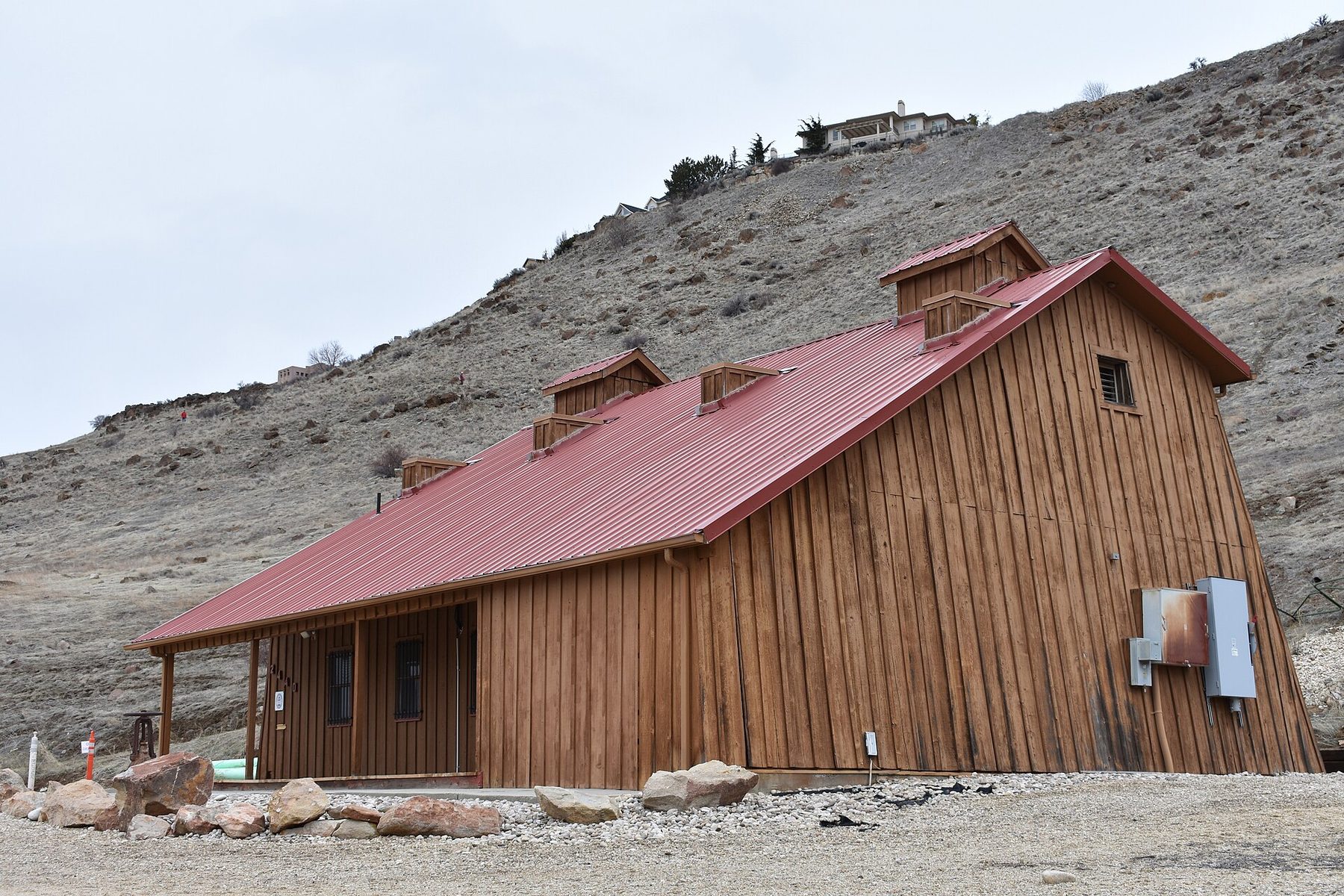
The hot water is not a quirk of plumbing. It comes from a fault.
Boise sits on the northern edge of the Western Snake River Plain, a basin filled with volcanic rock and sediment.5 The edge of the plain, where the foothills rise, is a zone of normal faults that strike northwest to southeast, with displacements of up to 800 feet.5 Deep fractures in the granite of the Idaho Batholith carry water down from high elevations and back up along the fault zone.6
Geologists Spencer Wood and Willis Burnham mapped the Warm Springs area in 1987. The same rock layers exposed on the hillside above Quarry View Park, next to the old penitentiary, are the aquifer 850 feet below the park.6 The producing wells draw from fractures in subsurface rhyolite, sealed above by a thick layer of basalt and clay that keeps the heat in.6
The water itself is old. Carbon-14 dating gives it a residence time of 6,700 to 17,000 years from the time it fell as rain or snow in the mountains.6 It is slightly alkaline, with total dissolved solids of 320 milligrams per liter.6 And in more than a century of pumping, no change in temperature, or the physical and chemical quality of the water has been documented since the initial well construction.
6 The district's manager told Territory Magazine the temperature holds at 177 degrees, not more than one degree different from when the Warm Springs district first started pumping.
11
The original 1892 wells and the pump house that encloses them are listed on the National Register of Historic Places.6,17 The pump house was built by cutting off the tops of the original wooden drilling derricks and enclosing the framework.1
Part five: a century of keeping it running
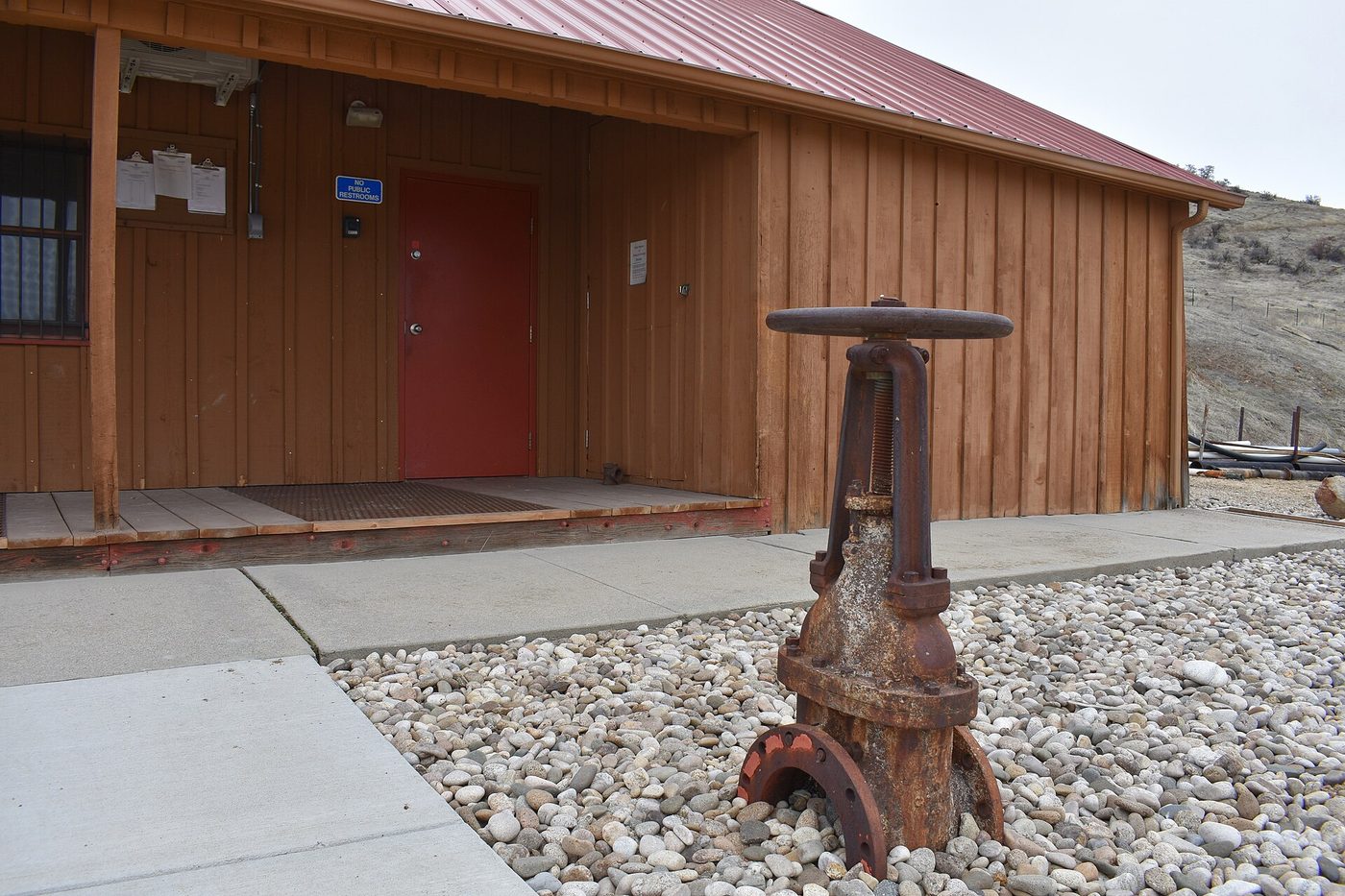
Nothing about running the system was easy, and the early operators ran into the same problems district heating engineers face now: marketing, rates, metering and hardware.1
Pipes. The wooden pipe was declared "dangerous and useless" by 1896, probably because the iron bands corroded rather than the wood.1,2 Around 1910 it was replaced with iron alloy pipe with lead and oakum joints, some of it insulated by building redwood boxes around the pipe and packing them with sawdust; some of those boxes were found intact in the 1980s.1 Electrolysis from the new electric service in the early 1900s ate at the pipe.1 In 1937 most of the mains were replaced with cast iron, which served until 1982, when the whole system was replaced with asbestos cement pipe.1
Pumps. The wells ran on natural artesian pressure at first. Between 1900 and 1912 an air-lift pumping experiment increased flow but, after four years, the air had rusted out the metal pipes of the entire system.
1 Two new 16-inch wells with electric turbine pumps went in around 1911 or 1912.1 A variable-speed pump installed in 1927 had no automatic controls, so prison trustees were stationed in the well house 24 hours a day to adjust the motor by hand. When the pressure gauge downtown drifted, an employee called a supervisor, who called the prison switchboard, who told the trustees which way to turn it. That arrangement lasted into the 1970s.1
Billing. Flat rates of $2 to $3 a month gave way to an attempt at water meters, which failed in the hot water. For most of its history the district has charged by orifice plate: a small stainless steel disc with a hole in it, placed in each customer's service line, with a fixed system pressure. The bigger the hole, the more water, the higher the bill.1,4 That method has not changed since 1892.4 In 1897 a 3/16-inch orifice cost $80 a year. In 2017 the same size cost $859.4
Decline and rescue. By the 1930s about 400 residences were connected.7 Then a windstorm in July 1934 brought a humidity-weakened roof beam down into the Nat's pool, and the building was torn down.7,16 Cheap hydropower and the arrival of natural gas in 1956 shrank the customer base; by 1970 about 200 homes and a few businesses remained.4 As late as 1958, 244 customers were still on the line.2
In 1974, with repair and renovation overdue, about 200 homeowners and a half-dozen businesses bought the system themselves.2,7 That purchase created the Boise Warm Springs Water District, the patron-owned public body that runs it today.1,8
Part six: the fight over the aquifer
The 1973 energy crisis made everyone look at Boise's hot water again. In 1975 and 1976 test wells drilled along the foothills near Military Reserve Park hit 165- to 170-degree water.5 Governor Cecil Andrus asked for a federal feasibility study. In 1977 the State Health Laboratory was retrofitted for geothermal heat as a pilot, supplied by the Warm Springs district, and it worked.5
Within a decade three new systems were pumping from the same aquifer: the State of Idaho's Capitol Mall system in 1982, which made the Idaho Capitol the only state capitol in the country heated by geothermal water; the City of Boise's downtown system in 1983; and the Veterans Administration's wells in the 1980s.5,4
The State and the VA built injection wells from the start, returning spent water underground. The City did not; it dumped used water into the Boise River.5 Water levels in production and monitoring wells began falling in the mid-1980s.5 Between 1981 and 1989 the aquifer dropped nearly 50 feet.4 Kelly Hot Springs, two and a half miles southeast of the original wells, had already stopped flowing early in the 20th century, the first sign that the resource was finite.5
In 1987 the Idaho Department of Water Resources created the Boise Front Low Temperature Geothermal Resource Ground Water Management Area, and in 1988 it issued a moratorium on further development.5 The City's geothermal coordinator later described the pressure plainly: Year after year the aquifer kept declining and we started getting sued by other users of geothermal who said wells were drying up.
11
The fix was a 3,213-foot injection well, completed in 1999. Water levels in the nearby monitoring well began recovering almost immediately and rose for years afterward.5 By 2017 the City was reinjecting all of its water and levels had climbed back near their pre-development state.4 A 2002 agreement among the users let the City raise its ceiling to 230 million gallons a year.5
The Warm Springs district has never had an injection well. Its spent water goes to the city sewer, and from a few of the older homes to a canal, at 100 to 140 degrees.4 Rafferty noted in 1992 that extensive surface disposal in Boise had produced measurable declines in the geothermal aquifer.
1
Part seven: the district today
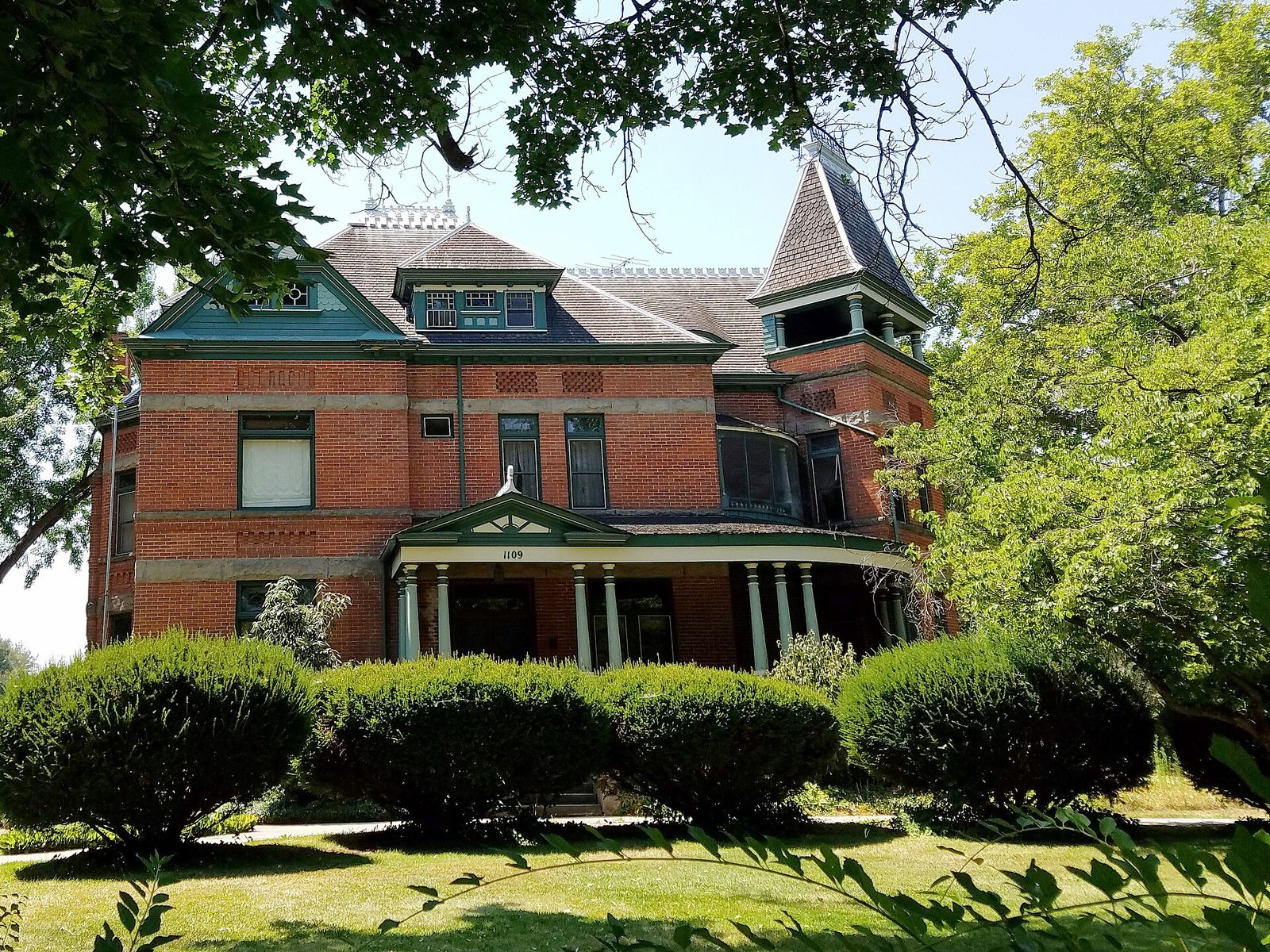
The Boise Warm Springs Water District still uses the two original wells drilled in 1890 and 1891.4 It delivers more than 1,400 gallons a minute of 175-degree water in winter to over 300 homes, the State Health Laboratory and the State Agricultural Building, and in summer supplies hot water for domestic use to more than 100 homes.4 The homes range from small bungalows to turn-of-the-century mansions of more than 5,000 square feet.4
Its stated mission is to sustainably provide geothermal water to patrons for the primary purpose of heating their homes or businesses.
8
The four Boise systems together heat an estimated 7.4 million square feet.4 The City system, the largest in the country, heats 5.5 million square feet with the only energy cost being the pumps at the production and injection wells, roughly $1,000 a month in winter.11
The 2023-2024 mainline replacement
The district's 12-inch trunk main under Warm Springs Avenue was Transite, a concrete-asbestos pipe installed in the 1970s, and it had reached the end of its 40-year life.9 Patrons voted on November 3, 2020 to let the district borrow for a replacement, and the district took a 20-year loan of about $3 million. Knife River won the bid and began at Bruce Avenue in August 2023.9 Only district members pay for it; the downtown and Boise State users are on the separate City system.9
It was not painless. In November 2023 some East End residents were shifted onto the city line while the main was replaced, and homes dropped to 55 degrees; one resident reported pressure at about 8 psi instead of the normal 18.14 "A lot of stuff has been buried in Warm Springs that we did not know," one said.14 In fall 2024, to finish the main, the district shut off both well pumps, and the artesian water, with nowhere to go, surfaced as a temporary hot pond at the edge of the Table Rock parking lot before the new line was tested and the pumps restarted.15
Part eight: what people do with the water
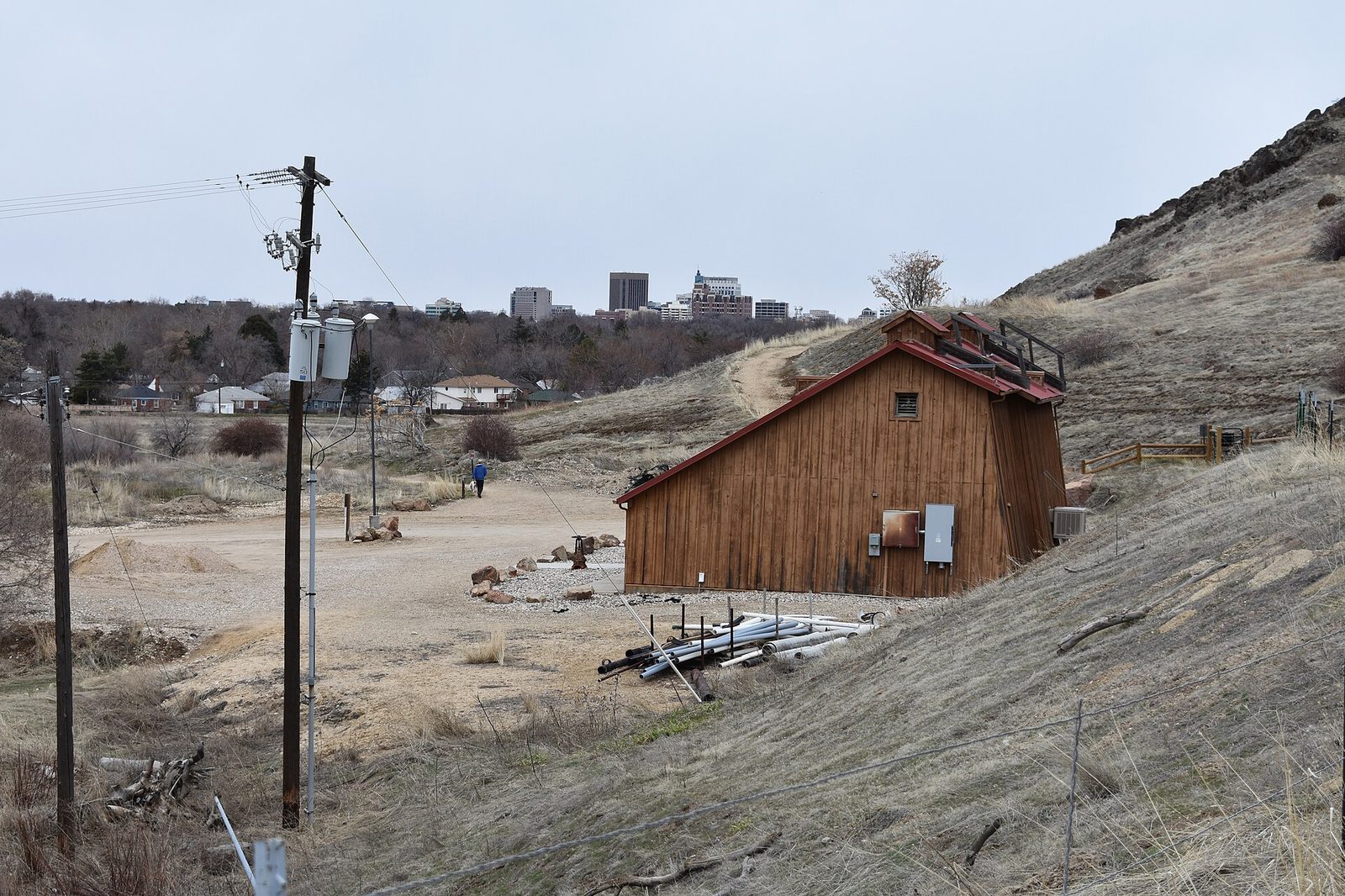
The district brings hot water to the property line. Everything after that is the homeowner's: The homeowner is responsible for installing piping, a heat pump exchanger or radiators in the house.
11 The district's 2025 policy is explicit that the customer owns and maintains the service line, "the entire water service connection apparatus and plumbing equipment and materials," and that the district assumes no responsibility for inspecting it.8 Every connection, alteration or tap requires a district permit and inspection first.8
Here is what the water is used for, drawn from the district's own rules, the engineering record, and people who live with it.
Space heating through radiators, the original way. Most of the older houses run the geothermal water straight through cast iron radiators and then out to the drain. One Warm Springs homeowner described it on a heating forum: "165 deg F geothermal water comes into our house at a fixed pressure like city water," and all homes on the street dump our water in a creek behind the house.
10 The district maintains the pressure, so there is no pump, no gravity system, and no steam in the house.10
A heat exchanger and a closed loop. Heating engineers on that same thread were unanimous that a modern retrofit should put a heat exchanger between the geothermal water and the house: you really need a coax heat exchanger to separate the geo circuit from the heating circuit (open loop on the geo side, closed loop on the space heat side).
10 From there you pipe it like any hydronic boiler, with a circulator, pressure-reducing valve and expansion tank, and you can zone it.10 The reason is warranty and corrosion: new radiators or floor loops carry a warranty only if they are isolated in a closed loop.10 A local tech who has worked on these systems added one material rule: The one item you do not want to use is copper. Black pipe, brass, stainless steel, pex are fine.
10
Radiant floors. Once the water is behind a heat exchanger in a closed loop, it is ordinary hydronic heat and can feed in-floor PEX loops like any boiler would. The forum advice on circulators, zoning and closed-loop isolation applies directly.10 I have not found a published Boise example of a geothermal radiant floor to cite here, so treat this as the engineering logic rather than a documented installation.unverified
Domestic hot water. In many of the older houses the geothermal water goes straight to the hot tap.10 The district supplies summer hot water to more than 100 homes for this purpose.4 Current practice under the plumbing code, per the local tech, is to put in a gas or electric heater or "a hydronic tank with heat exchanger" rather than sending the mineral water to the faucets.10 The district defines domestic service as water for "bathing, washing and laundry" inside a single-family residence, and says it shall not be used outside a home or residence, or for other purposes including, but not limited to, filling spas or swimming pools.
8
Snow melt, hot tubs, greenhouses. These are the uses people ask about, and the answer from the rules is narrower than the folklore. The district's mission is heating homes or businesses, its domestic service excludes spas and pools, and it can cut off service for "water waste" or "excessive demands by one customer" that leave others short.8 Boise's first geothermal greenhouse, Edwards, dates to 1930, but it sits on its own 1,000-foot well, not the district line.7 Anyone planning an outdoor use should ask the district first; the policy requires written approval for any new connection or change.8
Heat pumps for more extraction. The City system's pricing rewards buildings that take more heat out of each gallon: at 50 degrees of extraction the customer saves about 30 percent against natural gas, and a heat-pump building that takes 80 degrees out saves more and needs less water.5 The same logic applies to a house: the colder the water leaves, the less you draw through the orifice.
Other people's setups
This section is meant to hold photographs of real Warm Springs and Bannock installations, radiators, heat exchangers, manifolds and floor loops, with the owner's permission. None are here yet. If you live on the line and would share a photo of your mechanical room, that is the next thing this page needs.
Timeline
- 1881The Eastman brothers pipe spring water to their Overland Hotel.12
- 1890Idaho statehood. Drilling for hot water begins near the penitentiary in December.2,3
- January 24, 1891175-degree water at 404 feet.4
- March 28, 1891Artesian Hot and Cold Water Company formed.4
- August 23, 1891First electric streetcar up Warm Springs Avenue.13
- February 1892C. W. Moore's house becomes the first geothermally heated home.2,12
- May 25, 1892The Natatorium opens.1,2
- 1896Wooden pipes abandoned as "dangerous and useless."1,2
- c. 1910Iron pipe replaces wood.1
- 1927Variable-speed pump installed, run by hand from the prison.1
- 1930sAbout 400 residences on the system.7
- July 1934Windstorm wrecks the Nat; it is torn down.7,16
- 1937Cast iron mains installed.1
- 1956Natural gas reaches Boise; customers leave.4
- 1974Homeowners buy the system; the Boise Warm Springs Water District is born.2,7
- 1977State Health Lab pilot retrofit succeeds.5
- 1980Warm Springs Avenue Historic District listed on the National Register.3
- 1982Capitol Mall system online; whole district repiped in asbestos cement.5,1
- 1983City of Boise downtown system online.5
- 1981-1989Aquifer drops nearly 50 feet.4
- 1987-1988Management area and moratorium.5
- 1999City injection well completed; levels recover.5
- 2020District patrons vote to fund mainline replacement.9
- 2023-2024Warm Springs Avenue mainline replaced.9,15
- 2025District adopts updated operational policies.8
A note on what this page is and is not
Everything above with a bracketed number is drawn from the source it points to, most of them primary: the 1992 engineering history, the 1977 Historical Society reference sheet, the 1980 National Register nomination, the 1987 geology field guide, the 2006 and 2017 Geothermal Resources Council papers, and the district's own 2025 policy document. Where a claim is my inference, it is marked. The single most important secondary source, Dean Worbois's 1982 booklet "Glad to Be in Hot Water," is cited by nearly every one of these and is not online; the Boise Public Library holds it.1
Addresses on this page are limited to those already published in the National Register nomination. No current resident is named.